Old Soul New Drape
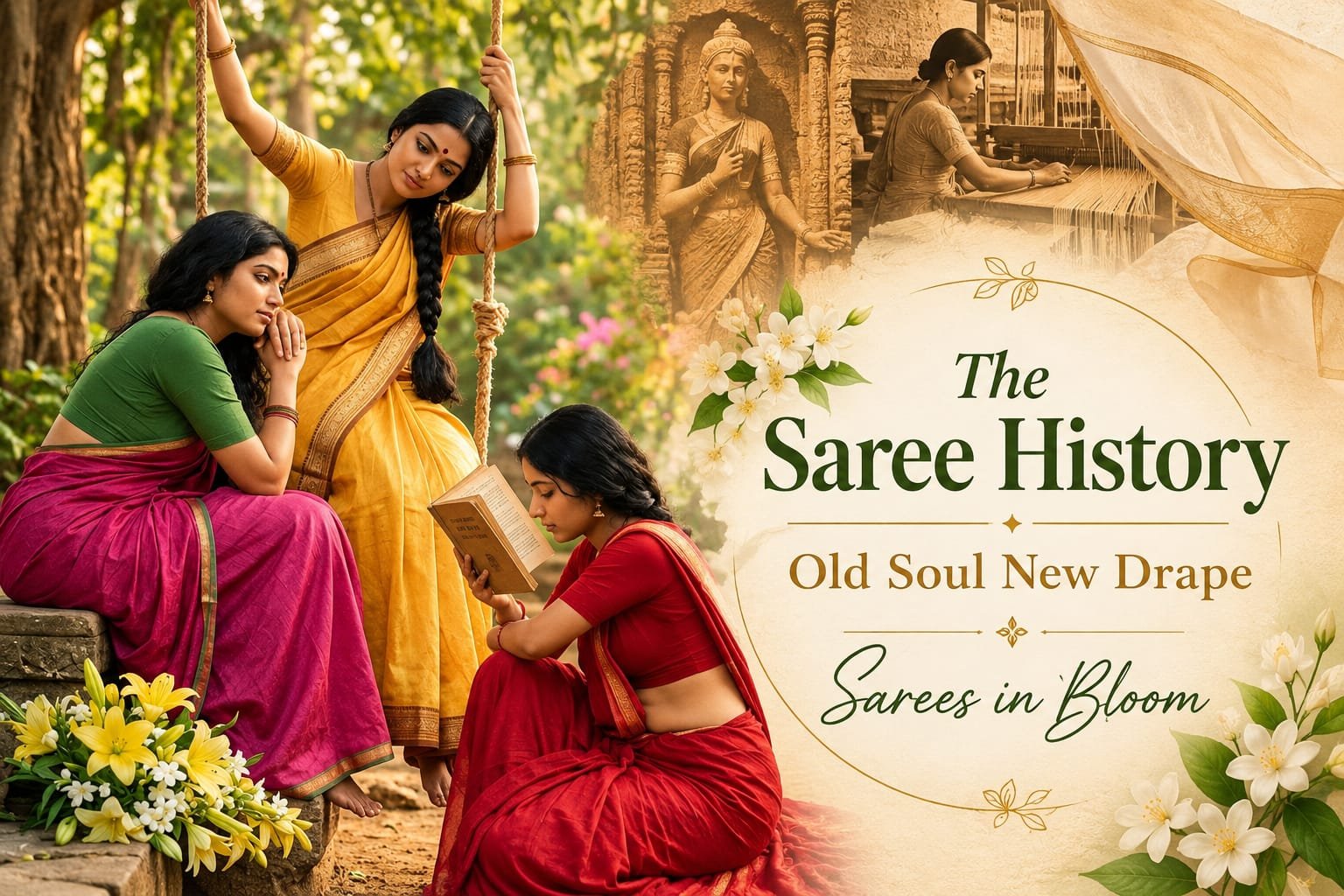
The History of the saree: Old Soul New Drape
The saree was not invented by any single individual. It naturally evolved over thousands of years from the lifestyle of our ancestors. Let's look at the complete details regarding this below:
Which country made it first?
The saree was first made in the Indian subcontinent (Ancient India).
The Journey of the saree:
The roots of this can be found in the Indus Valley Civilization, which flourished between 2800 BCE and 1800 BCE (encompassing present-day northwestern India). As early as the 5th millennium BCE, the people of this region had already begun cultivating cotton and weaving cotton yarn.
Who created it ?
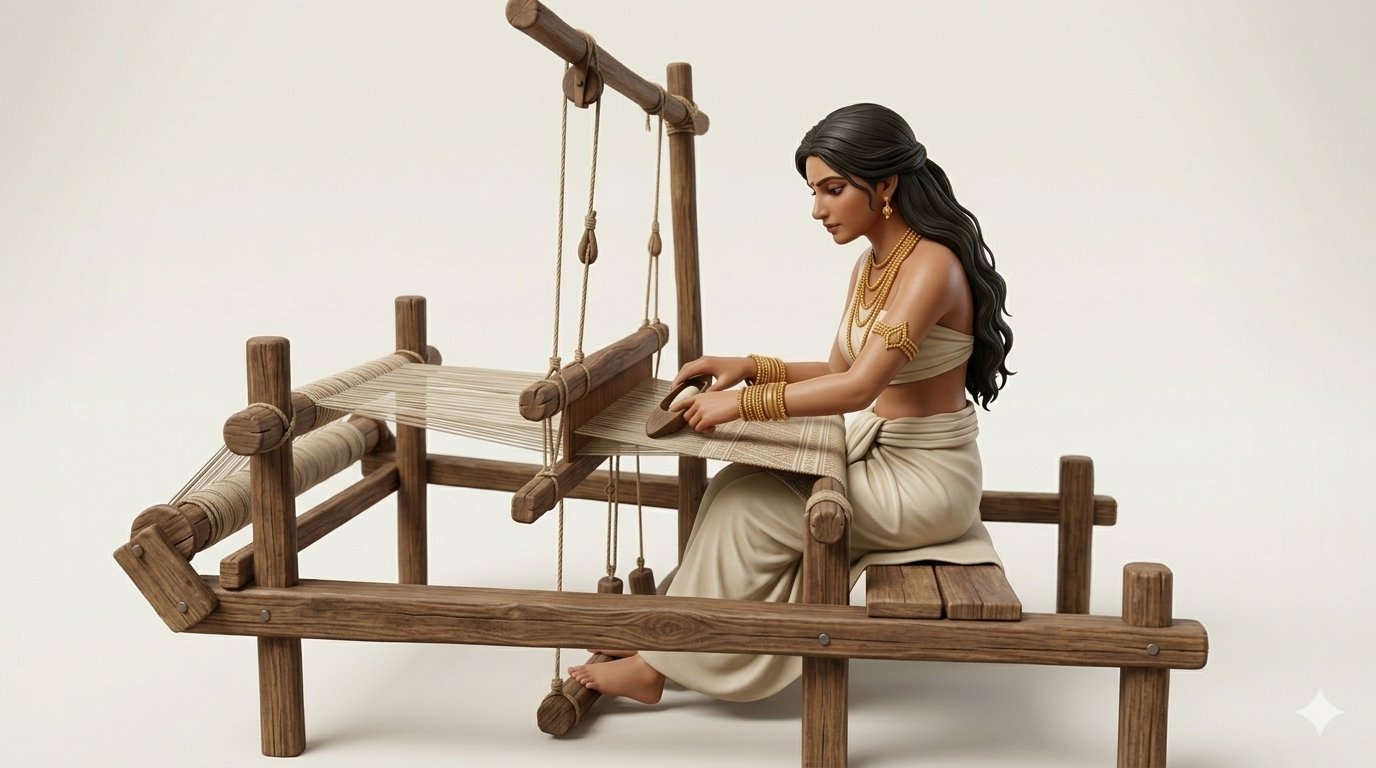
The ancient weavers of India were the first to skillfully weave a long, seamless piece of cloth. During that time, people started wearing this seamless garment to stay comfortable and suit the Indian climate (due to the intense heat). In those days, it was referred to as Satika.
The Story of Ancient Indian Three-Piece Ensemble style:
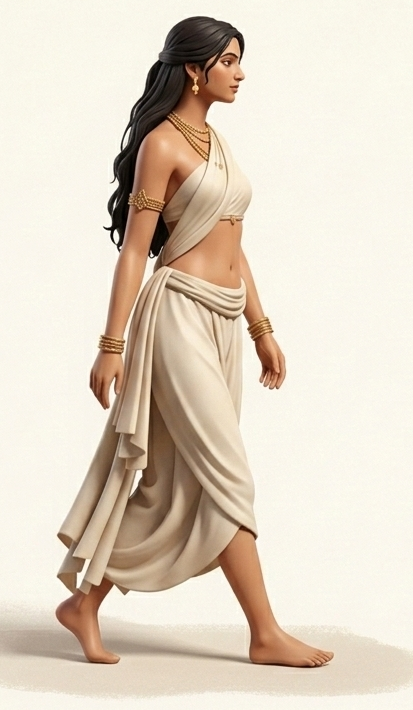
Long ago, in ancient India, women did not wear one long saree like today. Instead, they wore three separate pieces of cloth.
Antariya:
The bottom cloth. It was tied around the waist and legs like a skirt or a dhoti. It became the bottom part of today's saree.
Uttariya:
The top scarf. It was draped over the shoulder or head. It became the pallu (the long end) of today's saree.
Stanapatta:
The chest band. It was a simple tight cloth wrapped around the chest. It was the first form of today's blouse. In this way, using three unstitched pieces of cloth, women in ancient times dressed themselves in a very respectful and comfortable manner.
The Evolution Timeline: From 3 Pieces to the Modern Saree
The Visionary Who Introduced the Modern Saree Drape, Blouse, and Petticoat to India: Jnanadanandini Devi
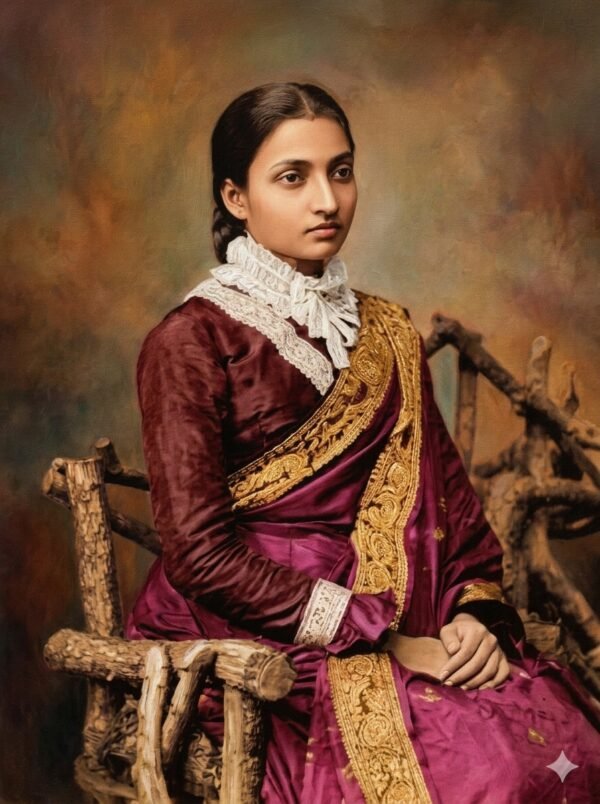
Jnanadanandini Devi was a prominent 19th-century Indian social reformer, writer, and a creative pioneer who brought revolutionary changes to the way Indian women wore the saree. She is well-known as the wife of Satyendranath Tagore (India's first ICS officer), the elder brother of the universal poet Rabindranath Tagore.
How Modern Innovator Jnanadanandini Devi Revolutionized Indian Women's Attire
She is called a 'modern innovator' because she revolutionized Indian women's attire by creating today's modern style of saree draping, along with the blouse and petticoat.
The Main Reasons and Background for Her Modernizing the Saree:
In 19th-century Bengal, upper-class women were confined to the inner quarters of the house (Andarmahal). At that time, a saree was worn as a single piece of cloth wrapped around the body, without a blouse or a petticoat. This draping style was not comfortable for women to step out into society, walk freely, work, or travel.
The British Club Incident:
Her husband, Satyendranath Tagore, was the first Indian ICS (Indian Civil Service) officer. When she traveled with him to Mumbai (then Bombay), Jnanadanandini Devi was denied entry into a British club because she wore her saree in the traditional Bengali style. They felt that style of draping was not "decent" enough for socializing in public. Because of that insult, she created the 'Brahmika Drape'.
The New Innovation (Brahmika Saree):
Jnanadanandini Devi closely observed the dressing styles of Parsi and Gujarati women in Mumbai, as well as British blouse designs. Blending them all together, she invented a new method of draping the saree by making pleats over a petticoat and pinning the pallu (loose end) over the left shoulder (today's Nivi style). Along with this, she started wearing a stitched blouse, a petticoat. This came to be known as the 'Brahmika Saree'. She taught this modern draping style to hundreds of local women. This brand-new attire not only gave women dignity but also provided them with complete confidence to freely step out of their homes to pursue education, take up jobs, and move around society with pride.
The Birth of Front Pleats:
The Maharani Suniti Devi of Cooch Behar: The 19th-Century Revolution that Redefined the Saree for Women’s Freedom!
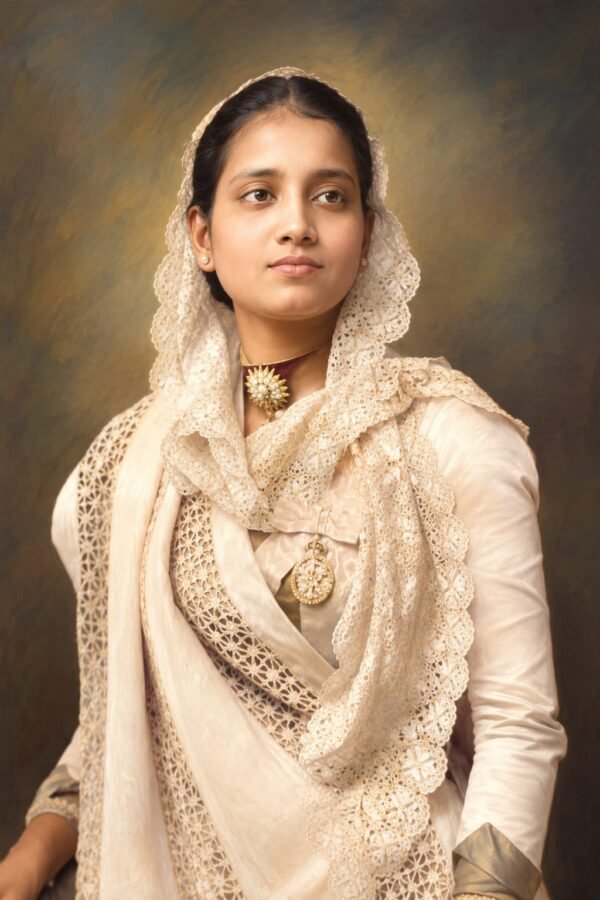
When we think of fashion revolutions, we usually picture the glamorous ramp walks of Paris and London. However, one of the most powerful fashion revolutions in history took place in 19th-century Bengal. It did not just change what women worn it completely transformed their freedom to move in society.This is the story of Maharani Suniti Devi of Cooch Behar, who redefined the saree style to empower Indian women to step confidently into the modern world!
The Saree Confined to the Inner Chambers
In the 1800s, Bengali women from aristocratic families rarely stepped out of the Andarkhana (the inner domestic quarters). At the time, the saree was worn as a single piece of fabric wrapped directly over the body, without a blouse (jacket) or a petticoat (skirt). While this drape was functional within the privacy of the home, it was completely unsuited for public life. Because the fabric slipped frequently and hindered easy movement, women's mobility remained severely restricted.During that time, social reform movements like the Brahmo Samaj were encouraging women’s education and freedom. However, there was a major problem: women did not have the right clothes to wear outside the house!
A Royal Touch to the Saree
In the early days, Jnanadanandini Devi introduced the "Brahmika style" of wearing a saree with a blouse and a petticoat. However, it was her friend, Maharani Suniti Devi, who made this style highly comfortable and brought it to the international stage.In 1887, Suniti Devi travelled to London to attend Queen Victoria's Golden Jubilee. She made brilliant changes to the saree drape so that it looked completely respectful in Western society while firmly keeping its Indian tradition.
The Royal Architecture: 3 Masterful Innovations by Maharani Suniti Devi
The 3 Important Changes Suniti Devi made:
1. Front Pleats (Nirya)
She began neatly pleating and tucking the saree at the waist. This allowed women to take longer strides and walk more comfortably and quickly without being restricted by the saree.
2.The Royal Brooch
When shaking hands with the British or attending formal gatherings and dinners, she used an elegant jeweled brooch to pin the pallu securely to her blouse, preventing it from slipping off her shoulder.
3. Victorian Fusion
She introduced a global touch by pairing traditional handloom sarees with high-neck, full-sleeved Victorian-style jackets, along with Spanish-style lace veils worn over the head.Through these three changes, Suniti Devi believed that women could be more comfortable, confident, and free in their everyday lives while still preserving the elegance and identity of the saree. Her innovations made traditional Indian clothing more practical for movement, social occasions, and the changing lifestyle of women.
A Legacy That Endured Through Generations
Suniti Devi proved that an Indian woman could embrace modernity and strength without giving up her culture. The fashion principle she pioneered later became an iconic style carried forward by her daughter-in-law, Indira Devi, the creator of the French chiffon sari trend, and her granddaughter, the world-renowned Maharani Gayatri Devi.
So, when we wear a sari with neatly arranged pleats and pin the pallu over our shoulder for the office or a special occasion today, we are not simply getting dressed. We are carrying forward a 150-year-old legacy of freedom, confidence, and change.